A Virtual Educational Program of Sikh Heritage Education and Cultural Organization of America
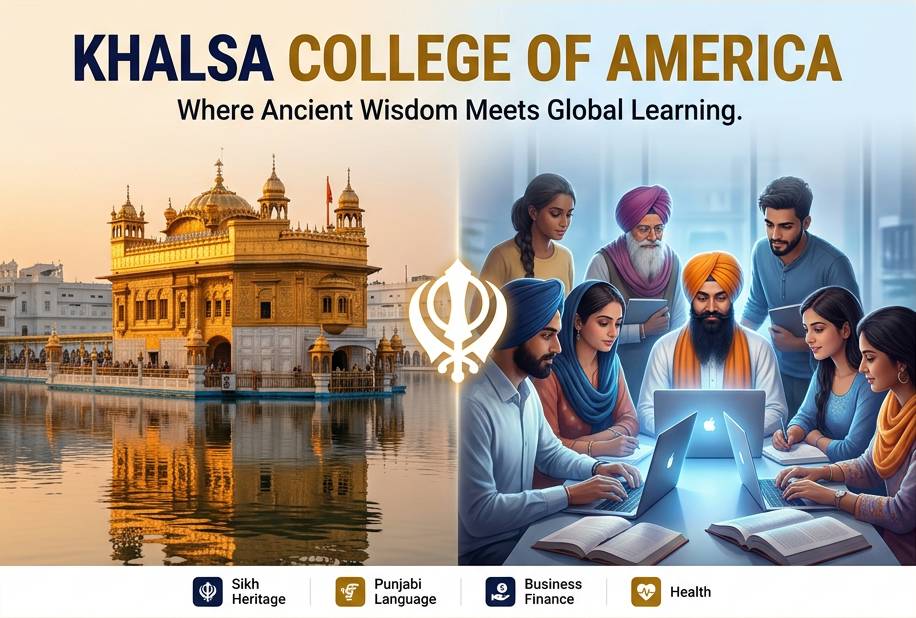
Khalsa College of America is a virtual educational institution that provides global learners with accessible, values-based instruction rooted in Sikh philosophy and ethical leadership. Operated by a California-based nonprofit, the college offers non-degree certificate pathways across diverse subjects, including Sikh heritage, Punjabi language, business finance, and health. The curriculum utilizes a flexible hybrid model featuring both live and recorded sessions to accommodate students of all backgrounds and ages. Beyond cultural and spiritual studies, the program emphasizes practical life skills such as career readiness, financial literacy, and technological proficiency. Students benefit from an inclusive environment that prioritizes community service and academic rigor at an affordable cost. Ultimately, the institution aims to foster holistic personal growth and historical honesty while preparing learners for success in a modern, globalized society.
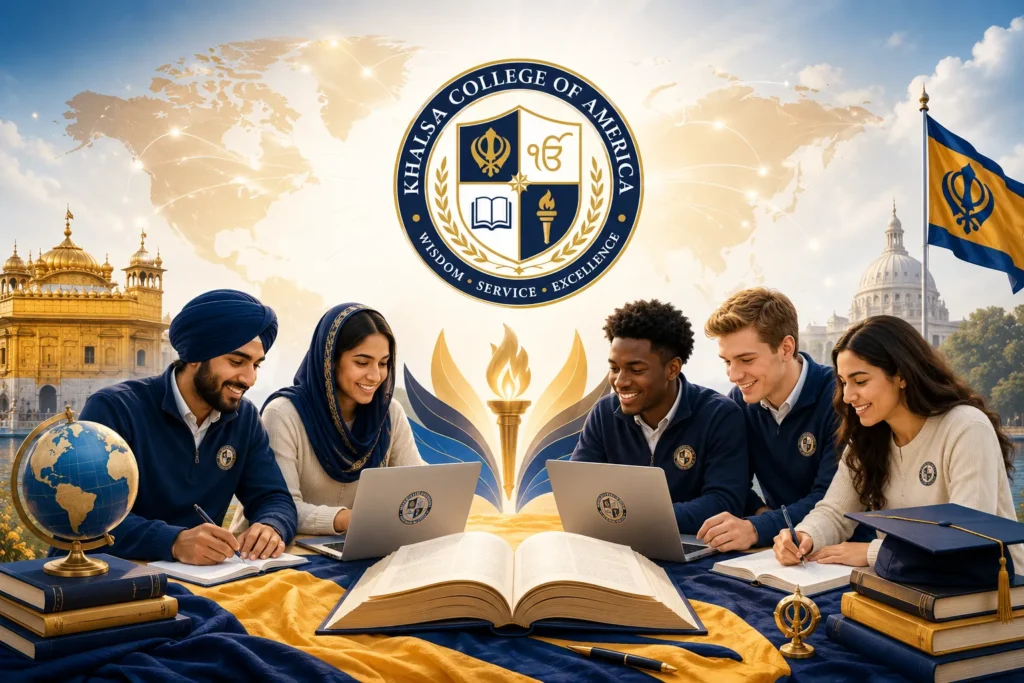
The Khalsa College of America aspires to become a respected center for excellence in Sikh studies, interdisciplinary scholarship, and ethical education. The College is committed to fostering critical inquiry, leadership, social responsibility, and meaningful dialogue among scholars, students, and community leaders while expanding its academic programs in alignment with institutional growth and regulatory approval.
The Khalsa College of America is committed to providing accessible, high-quality education grounded in Sikh philosophy, heritage, and ethical values. Through academic excellence, critical inquiry, and community engagement, the College seeks to develop informed, responsible, and service-oriented leaders prepared to contribute positively to society.
The Founding Prospectus of Khalsa College of America presents the vision, intellectual foundations, governance structure, academic programs, and long‑term aspirations of the institution. It is designed to introduce scholars, community leaders, donors, and students to the educational mission and future potential of the College.
Khalsa College of America seeks to create a global academic platform for the study of Sikh philosophy, history, ethics, and cultural experience. As a virtual institution, it removes geographic barriers and brings together learners and scholars from across the Sikh diaspora and beyond.
The founding of Khalsa College of America reflects a broader effort to strengthen scholarly engagement with Sikh intellectual traditions and to promote education that integrates historical understanding, ethical reflection, and civic responsibility.
Advisory board members guiding institutional governance and growth.
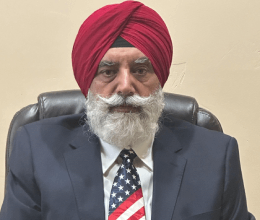

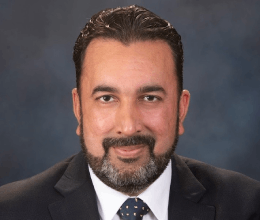


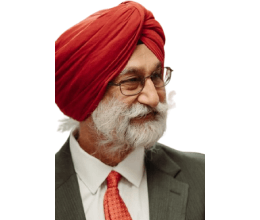

This manual defines the governance structure, academic policies, operational procedures, and strategic direction of the Khalsa College of America. The College operates as a virtual educational initiative under the Sikh Heritage Education and Cultural Organization of America, a California nonprofit public benefit corporation and federally recognized 501(c)(3). It provides the foundational framework for launching, managing, and expanding its academic programs.
1. Institutional Values: The College is guided by core values that shape its academic and organizational culture, including intellectual rigor, equality and human dignity, academic freedom, ethical responsibility, service (Seva), and global citizenship.
2. Core Academic Principles: The academic philosophy emphasizes rigorous scholarship grounded in established methodologies and critical inquiry. Education is viewed as a pathway to ethical development and social responsibility. The institution is committed to inclusivity, welcoming learners from all backgrounds, protecting academic freedom, and upholding historical honesty through balanced and truthful examination of both achievements and injustices.
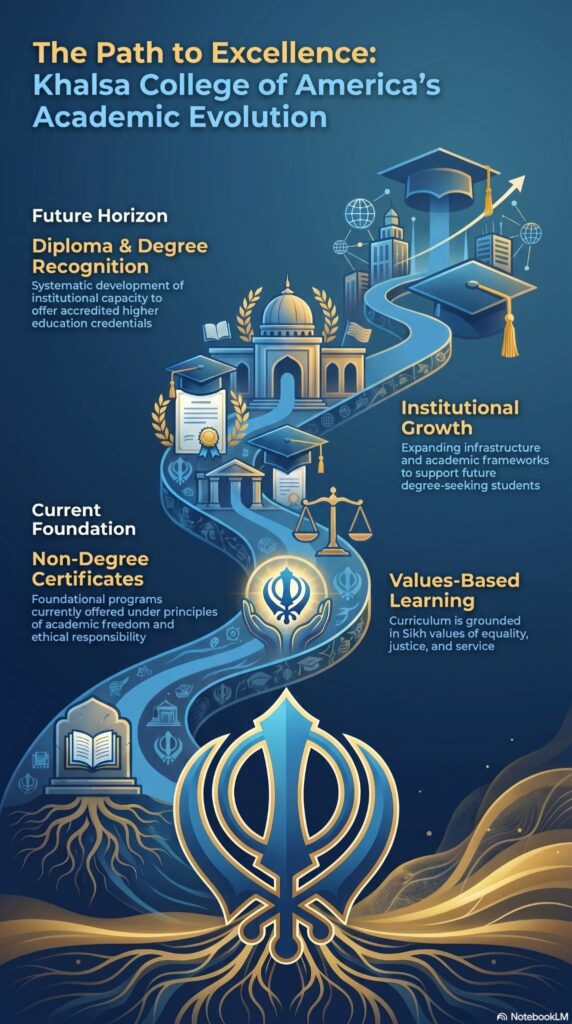
3. Educational Model: The Khalsa College of America functions as a virtual institution offering certificate programs, continuing education courses, public lectures, and research seminars. At present, it does not confer academic degrees.
4. Community Engagement: Beyond formal instruction, the College is dedicated to public education and outreach. Its engagement includes public lecture series, research seminars, cultural education initiatives, and collaborative partnerships with academic institutions to extend learning to the broader community.
Article 1 – Name
The program shall operate under the name Khalsa College of America (KCA), representing its academic identity within its parent organizational structure.
Article 2 – Authority
The College operates under the governance, oversight, and tax-exempt authority of the Sikh Heritage Education and Cultural Organization of America, ensuring alignment with its nonprofit mission and regulatory compliance.
Article 3 – Governing Board
The Board of Directors of the parent organization serves as the governing authority for Khalsa College of America, with responsibility for setting strategic direction, ensuring financial oversight, maintaining academic integrity, and appointing senior leadership.
Article 4 – Advisory Bodies
The Board may establish advisory and operational committees to support institutional effectiveness, including an Academic Advisory Council, Curriculum Committee, Finance and Audit Committee, and Ethics and Academic Freedom Committee, or other bodies as needed.
Article 5 – Program Director / Dean
The Program Director (or Dean) is responsible for the day-to-day academic and operational leadership of the institution, including curriculum development, faculty recruitment, student affairs, program administration, and reporting directly to the Board.
Article 6 – Academic Freedom
The College upholds academic freedom and encourages responsible intellectual inquiry conducted in accordance with recognized scholarly standards and the institution’s educational mission.
Article 7 – Non-Discrimination
The institution is committed to equal opportunity and prohibits discrimination based on race, ethnicity, nationality, gender, disability, religion, or sexual orientation.
Article 8 – Amendments
These bylaws may be amended, revised, or updated by a formal vote of the Board of Directors in accordance with governing procedures.
1. Conflict of Interest Policy: Board members and administrators must disclose potential conflicts of interest and recuse themselves from decisions where such conflicts exist.
2. Whistleblower Protection: Individuals who report suspected misconduct shall be protected from retaliation.
3. Financial Oversight Policy: All financial transactions shall be recorded within the accounting system of the parent organization with clear program-level reporting.
4. Records Retention Policy: Institutional records shall be maintained in accordance with nonprofit governance standards.
5. Academic Freedom Policy: Faculty and students are free to pursue scholarly inquiry and express ideas responsibly.
6. Data Privacy Policy: Student records and personal information shall be protected under applicable privacy laws.
7. Tuition Policy: Tuition rates shall be reviewed annually and approved by the Board.
8. Non‑Discrimination Policy: All programs and activities shall be accessible to individuals regardless of background.
1. Course Development: All courses within the Khalsa College of America must be designed with clearly defined learning objectives and include a syllabus, reading list, instructional materials, assignments, and structured assessments to ensure academic quality and consistency.
2. Curriculum Approval: New course offerings must undergo review by the Curriculum Committee and receive formal approval from the Dean prior to implementation to ensure alignment with institutional standards and mission.
3. Faculty Appointment: Faculty appointments are made based on appropriate scholarly qualifications and academic expertise. Appointments may include Adjunct Instructor, Visiting Scholar, or Guest Lecturer roles, depending on institutional needs.
4. Student Evaluation: Student performance is assessed through a combination of written assignments, class discussions, and final evaluations designed to measure comprehension, critical thinking, and engagement with course material.
5. Certificates: Upon successful completion of all required coursework and assessments, students are awarded certificates recognizing their academic achievement within the program.
6. Institutional Integrity: Khalsa College of America operates under academic freedom, ethical responsibility, and historical honesty—ensuring that learning remains transparent, inclusive, and grounded in Sikh values of equality, justice, and service.
7. Future Development: Current programs offer non‑degree certificates, with future development toward diploma and degree recognition as institutional capacity grows.